

Who is a citizen developer? A citizen developer is a business user who creates applications using no-code or low-code tools without formal programming skills. They work in operations, HR, finance, marketing, procurement, and field services — and use visual drag-and-drop platforms to build workflow automations, data collection apps, and approval systems for their specific departmental needs. They are not IT professionals. They are subject matter experts who understand a business problem deeply and have been given the tools to solve it. This guide covers their role, the skills they need, who can become one, and how businesses empower citizen developers with platforms like Quixy. For the full context on what is citizen development as a practice, see our complete guide.
Who Is a Citizen Developer?
A citizen developer is a business user who creates applications using no-code or low-code tools without formal programming skills. They build apps to solve business problems, automate workflows, or streamline tasks — typically without heavy reliance on IT teams.
Businesses worldwide are embracing no-code apps and citizen development platforms that enable them to digitally transform their processes in days or weeks, rather than months or years. And behind this transformation is a rising band of citizen developers from non-IT backgrounds.
No-code app platforms provide a user-friendly interface through which anyone — yes, anyone, even those with a non-IT background — can build applications without writing code. These platforms provide ready-made templates for the user interface and functionalities that address specific requirements. This means more people from different departments can realise their ideas without relying on conventional IT gatekeepers. Controlling the functions of the app does not require coding either — updates, changes, and new features are added by the same business user who built it.
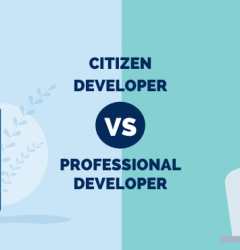
Citizen Developers vs Professional Developers
Citizen developers and professional developers are two distinct but complementary groups. Citizen developers are typically non-technical individuals from business or operational roles — marketing, HR, or finance — who use no-code or low-code platforms to build applications and automate processes. Professional developers have formal training in computer science and use programming languages to build complex, scalable, enterprise systems.
The key distinction is scope and complexity. Citizen developers handle departmental tools, workflow automations, and business-specific apps — the long tail of digital needs that IT can never realistically prioritise. Professional developers handle high-complexity, high-scale core systems. Despite their differences, the two groups often collaborate: citizen developers prototype and deploy rapidly, while professional developers refine and scale those solutions where needed.
Full comparison: For a detailed side-by-side breakdown across 10 dimensions, including tooling, speed, governance, and scalability, see Citizen Developer vs Professional Developer: 10 Key Differences.
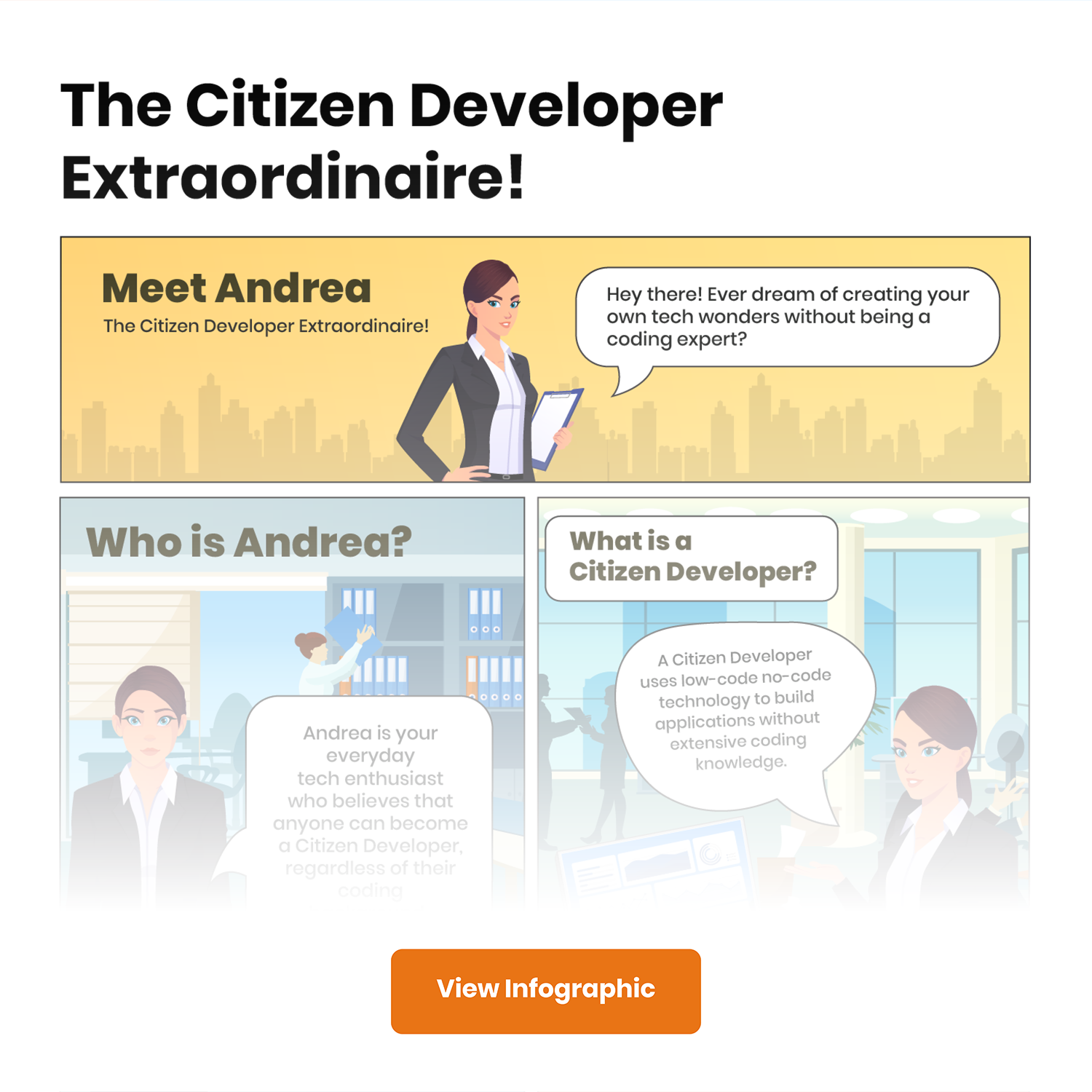
Watch Webinar: The Rise of Citizen Development in Enterprise App Development
What Skills Does a Citizen Developer Need?
Becoming a citizen developer does not require extensive coding experience. The essential skills are:
- Problem-solving. The ability to understand a complex challenge clearly, break it into steps, and identify what a solution needs to do. This is more important than any technical skill.
- Business logic. Understanding how a process works end-to-end — who does what, when, and under what conditions. Citizen developers who understand their processes well build better apps than developers who have to learn the process from documentation.
- Communication. Citizen development is collaborative. Building an app that other people will use requires the ability to gather requirements from colleagues, explain what you are building, and iterate based on feedback.
- Critical thinking. Evaluating options, troubleshooting when something does not work as expected, and making practical decisions about how to configure a workflow without over-engineering it.
- Learning agility. No-code platforms evolve. A willingness to learn continuously and stay current with platform updates is essential for a citizen developer who wants to grow their capability over time.
Step-by-step guide: Become a Citizen Developer in 7 Simple Steps
Tools and platforms citizen developers use
No-code platforms are the infrastructure that makes citizen development possible at scale. They provide:
- Drag-and-drop UI builders. Instead of writing HTML or CSS, citizen developers assemble application interfaces by dragging and dropping components — form fields, buttons, tables, charts — into position on a visual canvas.
- Visual workflow designers. Approval logic, conditional routing, parallel paths, and SLA escalation are configured visually — without writing a single line of code.
- Pre-built templates. Common use cases like leave management, vendor onboarding, expense claims, and employee onboarding come as ready-to-customise templates. A citizen developer starts from a working baseline and adjusts it for their specific process.
- Integration connectors. No-code platforms connect to existing systems — ERP, HRMS, CRM, email — through pre-built connectors. Data flows between systems automatically without custom API development.
- Mobile access. Applications built on enterprise no-code platforms are accessible on mobile out of the box — important for field service teams, inspection workflows, and distributed operations.
- Governance and security controls. Role-based access, SSO integration, audit trails, and compliance certifications ensure that what citizen developers build stays within IT-approved boundaries.
Why citizen developers are rising: For the full picture on what is driving the growth of citizen development — the market data, the IT backlog problem, and the 2026 predictions — see Future of Citizen Development: Trends, Statistics and Predictions.
Citizen Developers and Low-Code
Citizen developers primarily use no-code platforms — tools that require zero programming knowledge. Some citizen developers also work with low-code platforms, which reduce but do not eliminate coding. Low-code platforms are better suited to technical citizen developers who have some programming familiarity and need to build more complex integrations or customisations.
The practical distinction matters when choosing a platform for your citizen development programme. True no-code platforms — where any business user can build and deploy without IT involvement at every step — are the right choice for most enterprise citizen development initiatives. Low-code platforms often still require IT involvement for complex features, which partially defeats the purpose of empowering business users to build independently.
Enterprise no-code platforms like Quixy sit in the genuinely no-code category while still meeting enterprise governance requirements — giving business users full independence without sacrificing IT control. can be just as efficient, leading to significant cost savings.
“A spectrum of citizen developer roles is emerging. These new roles may not replace traditional software developers, but they can enhance your software delivery strategy by giving your business people the tools they need to innovate on their own.”
John R. Rymer, Vice President, Principal Analyst serving Application Development & Delivery professionals at Forrester
Also watch:
How do No-Code Citizen Development Platforms Work?
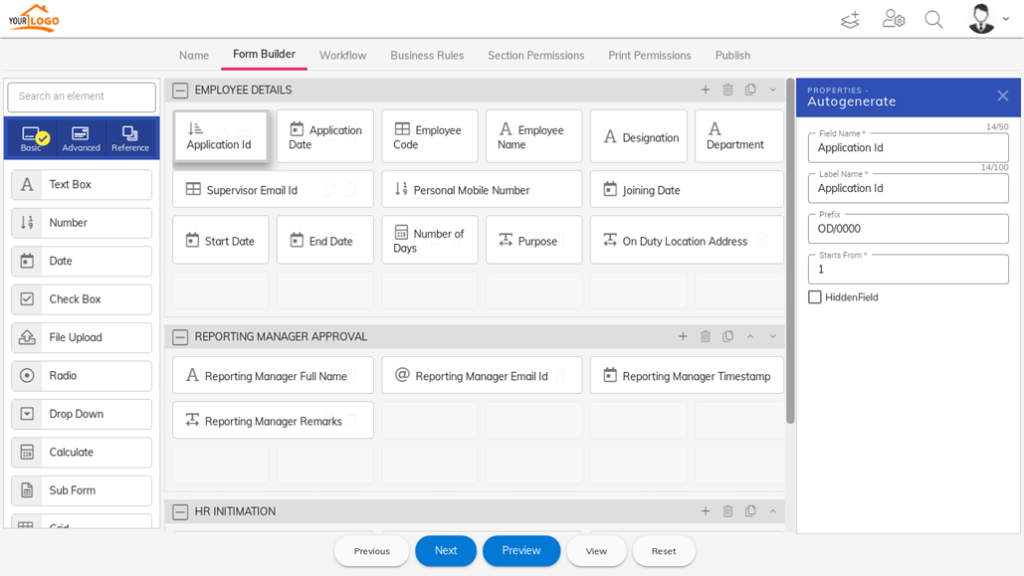
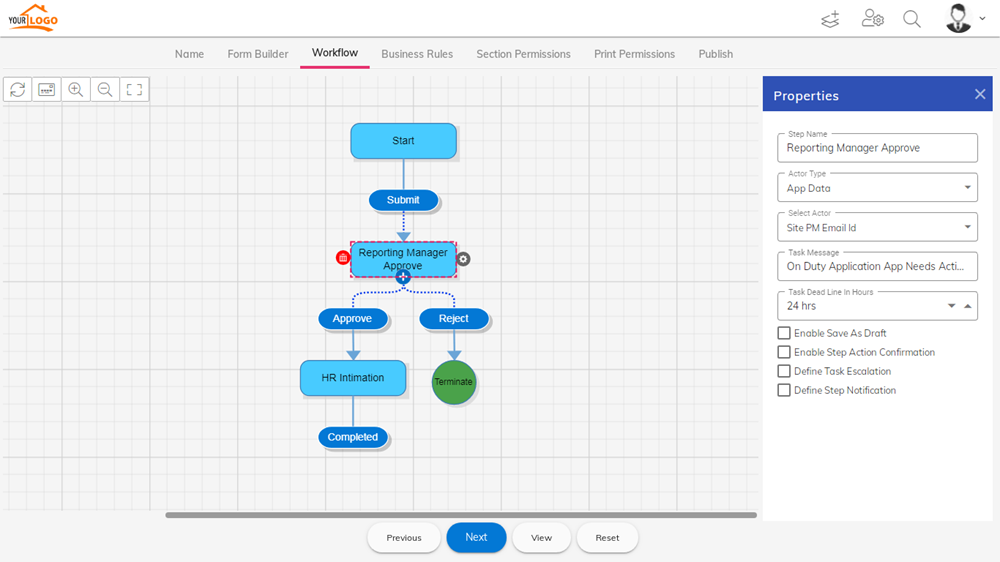
Citizen developers start creating their apps using a toolbox that is at their disposal. They simply have to drag and drop visual boxes to add and arrange functionalities and design workflows. Drop-down menus and a colour palette help to provide choice from a set of options, as well as customize or brand the app. What’s more, many platforms offer ready-made templates for typical business use cases. Citizen developers can employ the template to build additional functionalities on it that are specific to their company’s needs.
Also read: How to Implement and Govern Citizen Development
By creating a visual and intuitive interface, which graphically replaces the lines of code behind it, end users can set up their application, connect it with databases or web services, integrate it with other tools, and start using it for tackling work tasks. As you can see, app creation and deployment time are drastically reduced.
A significant deficit of 85.2 million IT workers is expected by 2030
Who can use No-Code Apps?
No-code apps are helpful for businesses of all sizes and in many different trades, as well as for individual professionals.
In Large Businesses, processes can be speeded in diverse areas including inventory management, equipment inspection, safety audits, and many more.
For Small Enterprises, no-code platforms are a real game-changer as they allow the creation of important customer-facing apps that can fuel sales and customer engagement.
Consultants and Freelancers can benefit greatly from the no-code apps to optimize their operations in diverse ways.
Citizen Developer with Low-Code
Citizen developers leveraging low-code platforms are transforming the way organizations approach software development and process automation. Low-code platforms provide intuitive, drag-and-drop interfaces and pre-built templates that enable individuals with little to no formal coding experience to create functional applications. These citizen developers are typically business users from non-technical backgrounds—such as marketing, HR, or operations—who have a deep understanding of specific business processes and needs. By using low-code tools, they can quickly design and deploy solutions tailored to their department’s requirements, such as automating repetitive tasks, building custom workflows, or creating simple apps for data collection and reporting.
The rise of low-code platforms empowers citizen developers to innovate without relying heavily on IT departments or professional developers. This democratization of development accelerates problem-solving and reduces bottlenecks, as business users can address their own needs in real time. Also, low-code platforms often include built-in features for integration, security, and compliance, making it easier for citizen developers to create solutions that align with organizational standards.
However, while low-code tools are powerful, they are best suited for smaller, department-specific projects or prototyping. For more complex, scalable, or mission-critical applications, collaboration with professional developers is often necessary to ensure robustness, performance, and long-term maintainability. Overall, citizen developers using low-code platforms are playing a pivotal role in driving digital transformation and fostering a culture of innovation within organizations.
Who Can Be A Citizen Developer?
Anyone can be a citizen developer, regardless of their technical background or coding experience. The concept of citizen development is to empower non-technical individuals to create their own software applications and technology solutions using low-code and no-code platforms. These platforms are designed to make application development accessible and easy to use, allowing anyone with an idea and the willingness to learn to create their own technology solutions. With the increasing availability of these tools and resources, there is no limit to who can become a citizen developer and create custom applications to solve real-world problems.
Anyone interested in creating software applications or automating business processes can become a citizen developer in an organization. This could include employees from different departments, such as marketing, sales, human resources, or finance, who understand their business processes and the challenges they face. They can leverage low-code and no-code development platforms to create custom applications and automate tasks to increase efficiency and productivity.
Also Read: Meet the Top Citizen Development Influencers
IT professionals and developers can also become citizen developers and use these platforms to create rapid prototypes and proofs-of-concept for testing new ideas and solutions. This can help bridge the gap between business requirements and IT implementation and accelerate development.
Anyone willing to learn and desire to improve their organization’s processes and operations can become a citizen developer and contribute to their organization’s digital transformation.
Also Read: Become a Citizen Developer in 7 Simple Steps: A How-To Guide
How No-Code Platforms Enable Citizen Developers
The rise of the Citizen Developer movement is changing the way companies approach software development.
According to Gartner, it is said, 70% of new applications developed by organizations will use low-code or no-code technologies.
“Research indicates that nearly 80% of top-performing companies (pacesetters) in the US utilize citizen developers.”
With low-code and no-code platforms, business professionals can create custom solutions without relying on traditional IT departments. This shift has significant implications for companies and provides numerous benefits that make investing in Citizen Developers a smart choice.
Cost-Effective Solutions
Using low-code and no-code platforms, Citizen Developers can create solutions faster and at a lower cost than traditional software development methods. This makes it easier for companies to stay within budget and get more value for their investment.
Increased Agility
Citizen Developers can respond quickly to changing business needs, delivering solutions in a fraction of the time it would take traditional software development methods. This increased agility allows companies to stay ahead of the competition and quickly pivot to meet new challenges.
Better User Experience
Citizen Developers have a unique perspective on end-users’ needs, allowing them to create tailored solutions to meet their specific needs. This results in a better user experience and increased adoption of the solutions.
Improved Innovation
By empowering Citizen Developers, companies can tap into a new pool of ideas and creativity. This results in increased innovation and the development of unique solutions that can drive growth and competitiveness.
Better Alignment with Business Goals
Citizen Developers have a deep understanding of the business & its goals, allowing them to create solutions that are aligned with the company’s objectives. This results in better outcomes and more efficient use of resources.
The rise of the Citizen Developer movement is a game-changer for companies of all sizes and represents a new era in software development. Within this landscape, Key Performance Indicators (KPIs) and Return on Investment (ROI) serve as the compass guiding organizations toward success. KPIs provide a quantifiable way to evaluate the effectiveness of these initiatives, shedding light on their ability to streamline processes and improve outcomes.
Meanwhile, ROI offers a financial perspective, illuminating the tangible benefits gained from embracing Citizen Development. By understanding and harnessing the potential of Citizen Development KPIs and ROI, businesses can navigate their digital journey with clarity and confidence, driving innovation and growth.
Citizen Developers Across Industries
The force of citizen developers has taken hold in various industries, including:
- Healthcare: Citizen Developers in healthcare sector are creating No-code apps for patient management, electronic health records, and appointment scheduling.
- Finance: Citizen Developers in Financial institutions use no-code apps for loan origination, fraud detection, and compliance management.
- Marketing and Sales: Teams can streamline their campaign creation and distribution besides using no-code apps for lead management, customer relationship management, etc.
- Retail: Citizen Developers in Retail companies are creating no-code apps for inventory management, customer relationship management, and supply chain management.
- Government: Citizen Developers in Government offices building no-code apps for citizen engagement, service delivery, data management and workflow automation.
- Manufacturing: Citizen Developers in Manufacturing companies are creating no-code apps for production management, quality control, and supply chain management.
- Education: No-code apps are being used in education by Citizen Developers for student management, online learning platforms, and course administration.
- Human Resources: No-code apps are used for recruitment, employee management, and performance evaluation by Citizen Developers in HR departments.
- Telecommunications: Citizen Developers in Telecom companies use no-code apps for network management, customer service, and billing systems.
These are just a few examples of how different industries are already using no-code apps, but they are also being adopted in many other industries.
Also read: Everything you should know about no-code development
Quixy – An Ideal Platform for Citizen Developers
Not all no-code platforms are built for enterprise citizen developers. Consumer-grade no-code tools lack the governance, integration depth, and security controls that IT requires before approving organisation-wide adoption. Quixy is built specifically for enterprise and government organisations where citizen development needs to be both genuinely accessible and rigorously governed.
- 40+ form field types including facial recognition, QR code scanning, sub-forms, field calculation, and grid controls — built for complex real-world data collection.
- Six-column drag-and-drop layout builder that gives citizen developers precise UI control without writing any code.
- Visual workflow designer supporting multi-step approvals, conditional routing, parallel approval paths, SLA escalation, and automated notifications.
- Built-in Sandbox environment for testing before deployment — so business users can validate their apps without risking live data.
- Enterprise governance built in — SSO, role-based access control, full audit trails, ISO and GDPR compliance. IT retains visibility and control as the programme scales.
- Caddie AI layer — turns workflow data into operational intelligence through plain-language queries, anomaly detection, and cross-source insights. No analytics expertise required from the citizen developer.
- Ready-to-use templates for applicant tracking, employee onboarding, leave management, vendor onboarding, and project management — so citizen developers start from a working baseline.
- Mobile access via Google Play — applications are mobile-ready out of the box, essential for field service and distributed operations teams.
Quixy is recognised in Gartner Peer Insights Voice of the Customer three consecutive years and ranked number one in G2’s BPM/DPA Momentum Report.
You can also check out Citizen Developer’s Toolbox: Insights and Strategies from Our eBook-Innovate and Empower: A Journey through Citizen Development!
Conclusion
It is not a technical role. It is a problem-solving role equipped with technical tools. Any motivated business user with domain knowledge, business logic, and a collaborative mindset already has the most important qualities. The platform provides the rest.
The organisations that recognise this and invest in empowering their people with the right platform, the right governance, and the right training are building a capability that compounds. Every workflow automated frees time for the next one. Every citizen developer trained creates confidence for others to start. Every application deployed generates data that improves decisions. The cycle is self-reinforcing — and it starts with answering the question: who in your organisation already understands the problem well enough to build the solution?
Frequently Asked Questions
Here are some of the frequently asked questions related to the rise of citizen developers and why businesses should care:
Q: Why is there a rise in citizen developers?
A: The rise of citizen developers is driven by the increasing demand for customized and flexible solutions, as well as the availability of user-friendly low-code and no-code development platforms that enable non-technical users to create applications and tools.
Q: Why do businesses need citizen developers?
A: We need citizen developers for several reasons:
Accelerated development: Citizen developers can help businesses accelerate the development process by creating applications and tools without relying on IT departments.
Customized solutions: By allowing them to create their own applications, businesses can get customized solutions that meet their specific requirements.
Cost savings: Citizen development can help businesses reduce the cost of development by using low-code or no-code platforms that don’t require specialized technical skills.
Innovation and collaboration: By empowering employees to create their own applications, businesses can tap into the creativity and ingenuity of their workforce.
Q: What tools do citizen developers use?
A: The most popular tools that citizen developers use are low-code or no-code development platforms. These platforms provide a user-friendly interface and pre-built components that allow non-technical users to create applications and tools without writing code. One of the most popular no-code platform is Quixy, platform provides a range of pre-built templates, components, and integrations that can help citizen developers quickly create applications and tools that meet their business needs.
Q. Can I be a Citizen Developer?
Yes, you can be a citizen developer. Citizen development refers to the practice of creating software applications, websites, and other technology solutions by people who are not professional developers. With the increasing availability of low-code and no-code development platforms, it has become easier for individuals with no coding experience to build their own applications.
Discover the step-by-step guide on how to become a citizen developer and create your own technology solutions by checking out our latest blog post!
Related Post

Please login to comment
0 Comments
Oldest
Recent Posts





- Download the App