
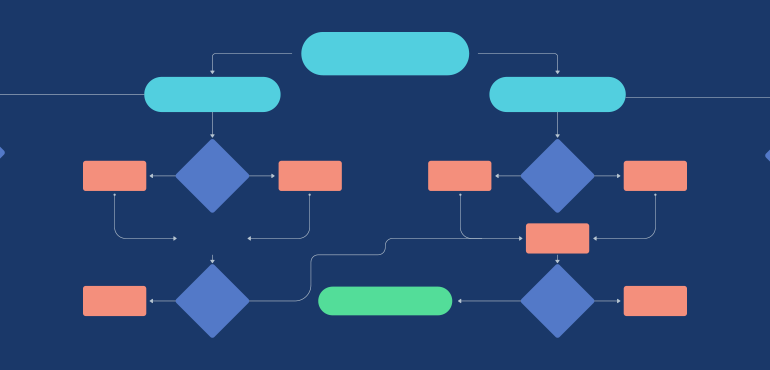
Complete Guide to Approval Process and Workflow: 5 Steps, 8 Examples and How to Automate in 2026
Reading Time: 7 minutesAn approval process and workflow is an automated sequence of steps that routes a request — document, budget, purchase order, or leave request — through defined approvers in a specific order, enforcing rules and capturing decisions at each stage without manual follow-up. It is the operational backbone of governed enterprise operations. Every business runs on

65+ Workflow Automation Statistics and Forecasts for 2026 You Can’t Ignore
Reading Time: 10 minutesWorkflow automation has crossed from competitive advantage to operational necessity. The numbers tell the story — market growth is accelerating, adoption rates are at record highs, and the arrival of agentic AI is fundamentally shifting what automation can do. This page compiles 65+ sourced workflow automation statistics across market size, adoption, ROI, productivity, department-specific data,

What Is Customised Workflow Management Software? Benefits & Key Features Explained
Reading Time: 7 minutesWhat is Customised Workflow Management Software? A purpose-built system designed around a specific organisation’s unique business processes, approval structures, team hierarchies, and operational requirements — rather than forcing teams to adapt to a vendor’s predefined template. Unlike standard off-the-shelf workflow tools, a customised solution lets enterprises define exactly how tasks flow, who approves what, what
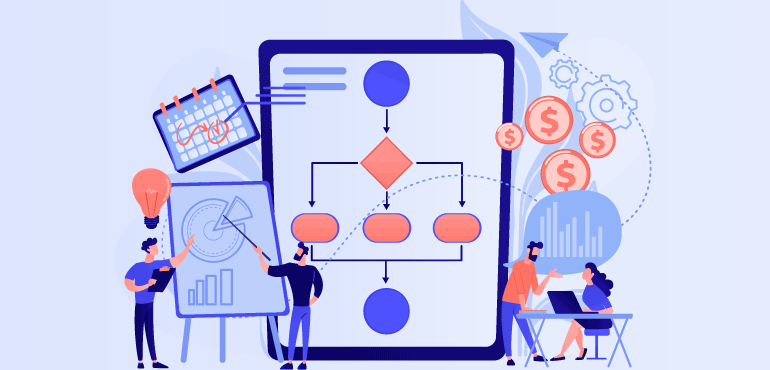
20 Essential Features of Workflow Management System Every Enterprise Needs in 2026
Reading Time: 10 minutesAn enterprise-grade workflow management system must include at minimum: a no-code process builder, configurable approval chains, task automation and routing, real-time dashboards, system integrations, role-based access control, mobile access, a complete audit trail, notification and escalation engines, and offline capability. The 20 features below represent the complete specification — from the basics every system must

Workflow Automation and Workflow Management: 10 Critical Differences You Can’t Ignore
Reading Time: 6 minutesA workflow is a repeatable sequence of steps you undertake to carry out a process. Consider it a series of tasks that move from one stage to the next until it is completed. Workflow automation eliminates human intervention and improves the efficiency of a process; workflow management is an approach that businesses undertake to ensure

What is Workflow Automation? 7 Powerful Ways It Transforms Business Operations
Reading Time: 8 minutesWorkflow automation is the use of technology to automatically execute a sequence of business tasks based on predefined rules — without manual intervention. When a trigger occurs, such as a form submission, an approval request, or a status change, the system automatically routes tasks, sends notifications, updates records, and moves work forward across connected systems

What is a Workflow Application? 8 Powerful Examples for Every Business Department
Reading Time: 10 minutesA workflow application is a purpose-built software solution that automates and manages a specific business process from start to finish — routing tasks, triggering notifications, enforcing approvals, and tracking status without manual intervention. Unlike generic workflow automation software, which provides a platform for building many processes, a workflow application is the finished product: the leave
From Bullet Journal to No-Code Workflow Automation: The Professional Upgrade Guide
Reading Time: 9 minutesEvery organised professional eventually discovers bullet journaling. The daily log. The weekly spread. The habit tracker. The project page that makes it feel like everything is, for one brief moment, actually under control. Then the team grows. The workflows multiply. And the notebook that once brought clarity is now three days behind, invisible to everyone

How to Prepare Your Business for the Future of Work: The Founders Who Act Now Will Win
Reading Time: 12 minutesKnowing how to prepare your business for the future of work is no longer a strategic exercise you schedule for next quarter. The future of work is not something that is arriving — sitting in your Slack channels, running in your automation scripts, reshaping what your best people want from work. The question every founder

60+ Hybrid Workplace Statistics You Need to Know 2026
Reading Time: 13 minutesNumbers do not lie — but outdated numbers do mislead. If you are building a business case for hybrid work, updating your organization’s hybrid work policy, or trying to understand where the market is heading in 2026, you need data from this year — not the pandemic-era figures that still circulate on most statistics pages.
Recent Posts






- Download the App