
Citizen Development Roles and Responsibilities: Practitioners, Architects and Strategists
Reading Time: 11 minutesCitizen development roles and responsibilities are the structural foundation that separates a programme that scales from one that creates shadow IT. Every successful citizen development programme has three distinct roles working together: Practitioners who build, Architects who govern, and Strategists who align with business goals. Without this structure, citizen development either stalls because no one is empowered to
What Is Citizen Development? The Complete 2026 Enterprise Guide
Reading Time: 11 minutesCitizen development is the practice of enabling non-IT employees to design, build, and deploy business applications using no-code and low-code platforms — without needing programming skills. These employees, called citizen developers, use visual drag-and-drop tools to automate workflows, build custom apps, and solve business problems independently. Gartner predicts that, by 2026, citizen developers will outnumber professional
How to Automate a Workflow Without Coding: 6 Steps to Your First No-Code Workflow
Reading Time: 10 minutesTo learn how to automate a workflow without coding, you need to: identify and name the process, build data capture forms using drag-and-drop field controls, configure the workflow logic with sequential or conditional steps, set business rules and validation conditions, configure access permissions by role, and publish the app with one click. On a no-code platform

Best No-Code Tools for Marketing Teams in 2026: The Complete Martech Stack Guide
Reading Time: 12 minutesNo-code tools for marketing teams are platforms that let marketers build campaigns, automate workflows, manage leads, and publish content without writing code or waiting for developer support. In 2026, the best marketing teams run on a stack of no-code tools covering CRM, email automation, content creation, landing pages, analytics, and internal workflow management. This guide covers
Top 20 Best No-Code App Builders in 2026: Enterprise, SMB and Citizen Developers Compared
Reading Time: 15 minutesA no-code app builder is a software platform that lets you create applications without writing code. Instead of using traditional programming languages, these platforms offer, drag-and-drop components, prebuilt templates, and intuitive workflows – so that anyone, regardless of technical background, can build functional, fully customised apps. The no-code development platform market is projected to reach $68

What Is a No-Code Platform? How to Choose the Right One in 2026
Reading Time: 12 minutesA no-code platform is a visual development environment that allows users to create applications without writing a single line of code. These platforms use drag-and-drop builders, pre-built components, and logic-based workflows to help users design and launch apps quickly — so that even non-technical users can build web apps, automate workflows, and manage databases from an

25 Best No-Code Automation Tools in 2026: Enterprise Workflow & Process Automation
Reading Time: 15 minutesNo-code automation tools let enterprise teams — operations, HR, finance, procurement, and compliance — build workflows, automate approvals, and eliminate manual processes without writing code or depending on IT. Unlike traditional workflow software that requires developer involvement, no-code automation platforms use visual drag-and-drop builders that non-technical users can deploy in hours. Enterprise-grade platforms like Quixy support

Top 10 No-Code Platforms for Resource Management System in 2026
Reading Time: 16 minutesOff-the-shelf resource management software offers a readily available solution — but one that is frequently over-engineered for needs you do not have and under-configured for the processes that actually matter to your organisation. You pay for features you will never use while working around the limitations of features that do not quite match your resource
Employee Training Management Software: 8 Key Features, Proven Benefits and How to Choose in 2026
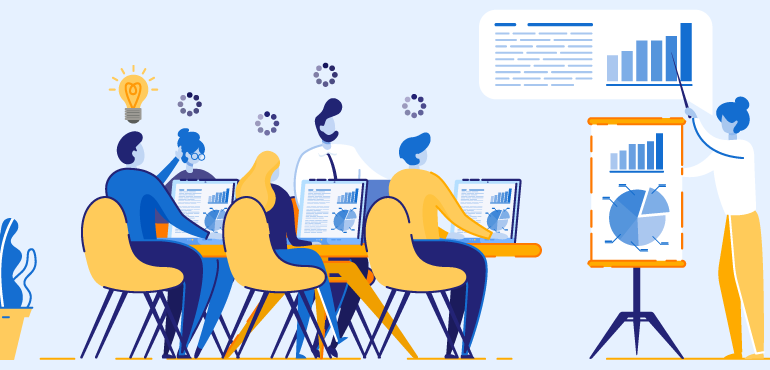
Reading Time: 14 minutesEmployee training management software (TMS) is a digital platform that manages the complete training lifecycle — from capturing training requirements and scheduling programmes to tracking attendance, collecting feedback, measuring effectiveness, and generating compliance reports — in one centralised system, without manual coordination at each stage. An investment in knowledge pays the best interest. Benjamin Franklin

Human Resource Management System (HRMS): The Complete 2026 Guide to Features, Functions and Implementation
Reading Time: 11 minutesAn HRMS (Human Resource Management System) is a software platform that integrates and automates core HR functions — including employee records, payroll, attendance, leave management, recruitment, performance, training, and compliance — into a single centralised system. It eliminates manual HR administration and gives HR teams, managers, and employees real-time access to people data and self-service
Recent Posts




- Download the App