
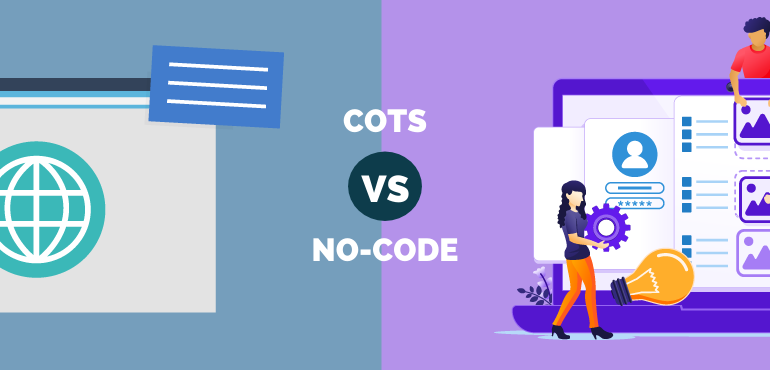
No-Code Vs. COTS (Readymade Software): Understanding the Pros and Cons!
Reading Time: 8 minutesJohn opens his laptop and logs in for the day. As per the discussion with his team on the previous day, he needs software to manage tasks and keep track of all his vendors and suppliers for their upcoming projects. As if reminiscing a terrible memory, he thinks about his buggy and constantly troubling COTS

How can No-Code for BFSI transform the Industry in 2026
Reading Time: 9 minutesThe past few years have seen the rise of remote working and disrupted industries across. But, the Banking Financial Services and Insurance BFSI sector has taken a massive hit because of the pandemic. Moreover, customer expectations keep rising, and new technologies and heavy regulations are the tips of the iceberg for banks and insurance companies

Savings with Quixy: This Customer saved $8000 a month in enterprise software!
Reading Time: 6 minutesBusinesses are like babies in a sense. They need to be fed with information, money, time, and energy and have to be nurtured to their true potential. However, unlike the 18-year mark, when children go off on their own, businesses need more nurturing, and their growth abilities never end. That is why more and more

Ultimate Future of Financial Process Automation in 2026: What, Why, and How No-Code Leads the Way
Reading Time: 11 minutesWe all know finances are the backbone of any and every business. Regardless of the industry, financial efficiency and effectiveness obviously lead to growth and success. And with no-code business process management (BPM) platforms available in the market, achieving it is not difficult; trust us. Businesses across departments and industries are exploring no-code platforms for
The Next Generation ERP System Unlock Excellence with No-Code Automation
Reading Time: 6 minutesDoes the ERP in your Organization have what it truly needs? The ERP system, used in companies of all sizes worldwide, has been given a death sentence since the early 90s. It had been foretold to become soon outdated, useless, and replaced. However, until now, there are still a huge number of organizations that are

Meeting Management Solution : Top 5 Benefits of Using Quixy
Reading Time: 6 minutesHow often have you walked back from a meeting and forgotten the details about the action points you discussed? How often have you attended meetings without any action points? Do you know that in a hybrid work environment, up to 50% of teams struggle with capturing action points efficiently, leading to missed tasks? These Meeting

The Ultimate Hyperautomation Revolution: Embrace the Future or Get Left Behind in 2026
Reading Time: 13 minutesBut what’s all the fuss about hyperautomation, and why has Gartner classified it as a top strategic technology trend? To answer these questions, we will have to dig deep, but let’s start from the basics – What is Hyperautomation? In simple words, it refers to continuous automation in business. When you keep integrating automation into

Hassle-Free No-Code CRM Solution to streamline your Sales Processes
Reading Time: 6 minutesYou don’t want to spend your entire day on just CRM. You just want a better CRM solution to monitor and scale your leads, keep track of your deals, and ultimately push your business forward. You’d rather do your real work and not have to worry about CRM all day. Enter Quixy, a leading no-code

Top No-Code Communities to Unlock in 2026
Reading Time: 6 minutesNo-code development is no longer far-fetched. It’s the present and everywhere- buzzing and growing with its unbeatable features. No-code apps are booming and have transformed the industry with their ability to solve software hassles within minutes without any coding knowledge! No-code’s simplicity in mechanics such as drag-and-drop and choosing from the given options to build

15 Critical Questions CIOs Must Ask Low-Code/No-Code Vendors
Reading Time: 6 minutesWe want everything to go today – including enterprise-grade applications! So, what are the Questions CIOs must ask? But before that, let us talk about modern work style. Everything from work styles to the way we look at applications has changed drastically in the recent past. We now want everything to be integrated quickly so
Recent Posts





- Download the App