
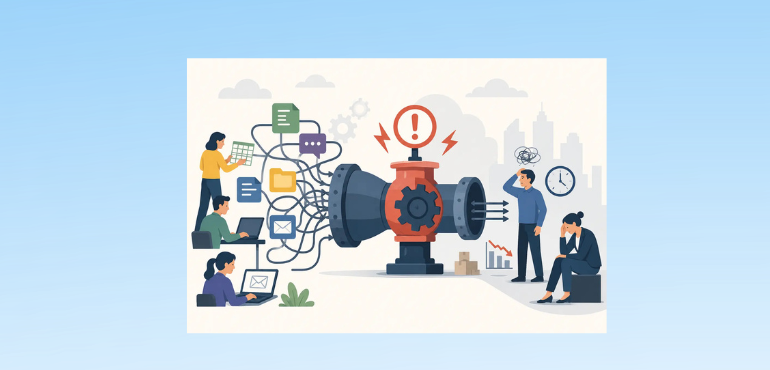
When Workflow Tools Become Operational Bottlenecks: 9 Warning Signs for Enterprises
Reading Time: 9 minutesWorkflow tools become operational bottlenecks when they can no longer adapt to evolving business processes, governance requirements, and cross-functional collaboration needs. Common warning signs include increasing manual workarounds, delayed approvals, fragmented data, poor visibility, rising compliance risks, and growing dependence on IT teams for routine process changes. For enterprises, workflow inefficiencies rarely appear overnight. They
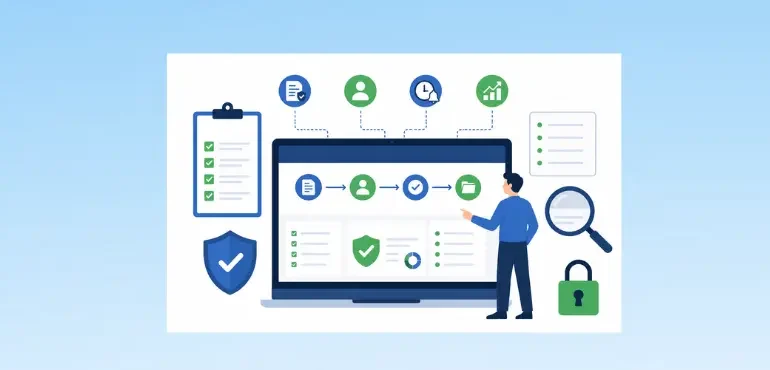
Workflow Compliance Management: Automating Audit-Ready Processes
Reading Time: 7 minutesCompliance is no longer a periodic activity performed only during audits. Modern organizations operate in an environment where regulatory requirements, internal policies, industry standards, and risk management obligations demand continuous oversight. As businesses grow, managing compliance through spreadsheets, emails, and manual checklists becomes increasingly difficult, creating operational inefficiencies and compliance risks. Organizations today face growing
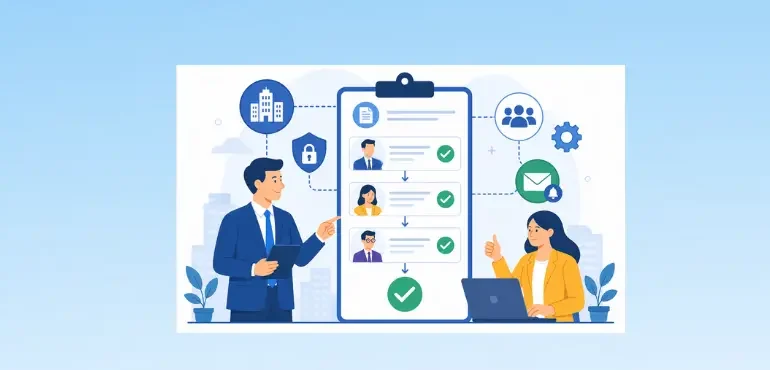
Enterprise Approval Workflow Design: Best Practices for Faster Decision-Making
Reading Time: 18 minutesEvery enterprise depends on approvals to maintain control, manage risk, and ensure accountability across business operations. Whether it involves budget requests, procurement approvals, vendor onboarding, contract reviews, policy exceptions, or resource allocation, approvals play a critical role in keeping business processes organized and compliant. However, many organizations struggle with slow approvals, unclear ownership, fragmented communication,
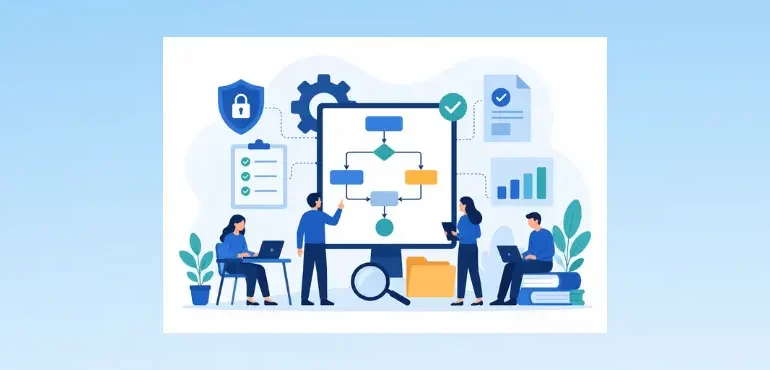
Workflow Governance Framework: How Enterprises Scale Automation Without Losing Control
Reading Time: 5 minutesA workflow governance framework is essential for enterprises that want to scale automation without losing control, visibility, or compliance. As organizations automate more business processes, governance becomes critical for maintaining consistency and accountability across workflows. Many organizations focus heavily on building automated workflows but spend far less time defining how those workflows should be governed.
How Enterprises Automate Approval Workflows Using AI
Reading Time: 6 minutesEnterprise approval processes often slow down because of manual reviews, email-based coordination, and inconsistent decision-making. Enterprise workflow automation using AI helps organizations streamline approvals by automatically routing requests, analyzing data, prioritizing tasks, and triggering actions in real time. As enterprises scale operations, AI-driven approval workflows improve speed, accuracy, compliance, and operational efficiency across departments. Modern
How US Enterprises Are Using AI Workflow Automation to Improve Operational Efficiency
Reading Time: 6 minutesUS enterprises are using AI-powered workflow automation software to eliminate manual bottlenecks, accelerate decision-making, and reduce operational costs. By integrating intelligent process automation into core business functions – from HR and finance to supply chain and compliance – organizations are achieving measurable efficiency gains, often cutting process cycle times by 40-70% within the first year
How to Automate a Workflow Without Coding: 6 Steps to Your First No-Code Workflow
Reading Time: 10 minutesTo learn how to automate a workflow without coding, you need to: identify and name the process, build data capture forms using drag-and-drop field controls, configure the workflow logic with sequential or conditional steps, set business rules and validation conditions, configure access permissions by role, and publish the app with one click. On a no-code platform

HR Workflow Automation: The Executive Guide to Automating 9 Core HR Processes in 2026
Reading Time: 18 minutesHR workflow automation is the use of technology to automatically execute, route, and track HR processes — from employee onboarding and leave approvals to performance evaluations and offboarding — without manual coordination at each step. It replaces email chains and spreadsheet tracking with governed, auditable digital workflows that run automatically based on predefined rules, so

What is Finance Workflow Automation?Unlock Sustainable Growth with 17 Examples
Reading Time: 11 minutesFinance workflow automation is the use of technology to automatically execute financial processes — routing invoice approvals, validating expenses, triggering payments, reconciling accounts, and generating compliance reports — based on predefined rules, without manual intervention at each step. It replaces email chains, spreadsheet tracking, and paper-based approvals with governed, auditable digital workflows that run automatically

Workflow Automation in Remote Learning: How Enterprise L&D Teams Automate Training, Compliance and Certification in 2026
Reading Time: 5 minutesWorkflow automation in remote learning is the use of technology to automatically manage the operational processes behind training programmes — assigning learning paths, tracking completion, sending reminder escalations, recording certifications, and generating compliance reports — without L&D coordinators manually following up at each step. The irony of enterprise L&D is this: the people responsible for
Recent Posts





- Download the App