
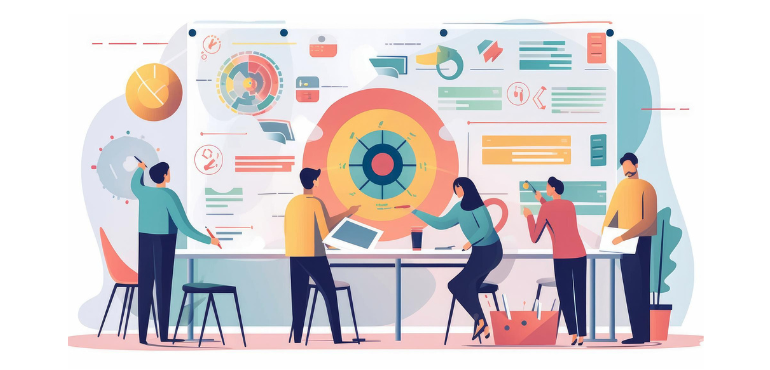
Top 10 Powerful Customizable Project Management Platforms to Look Out for in 2026
Reading Time: 11 minutesManaging projects today is more complex than ever. Teams are distributed, workflows are dynamic, and businesses demand faster execution with complete visibility. This is where a modern project management platform becomes essential. A project management platforms does more than just track tasks it centralizes planning, automates workflows, enables collaboration, and provides real-time insights to help

Hybrid Project Management: Combining Structure and Agility for Better Results
Reading Time: 7 minutesEvery project has unique demands—some require strict planning and clear milestones, while others thrive on flexibility and rapid iteration. Traditional project management delivers predictability through structured phases, clear timelines, and comprehensive documentation. Agile, on the other hand, prioritizes adaptability, continuous feedback, and iterative progress. Hybrid Project Management blends these approaches. It lets teams apply structure

Traditional vs Agile Project Management: Complete Comparison Guide 2026
Reading Time: 6 minutesFor years, project teams followed a predictable path: define everything upfront, document heavily, plan meticulously, and execute according to a fixed roadmap. This is the essence of Traditional Project Management — a linear, phase-driven method focused on fixed scope, detailed upfront planning, and predictable delivery. It worked well in stable, slow-moving environments where change was

Revamp Project Management with No-Code: Solution for Efficient Project Delivery
Reading Time: 7 minutesAccording to Henry Mintzberg, management is a practice where art, science and craft meet. Say goodbye to complex coding and hello to streamlined success! Explore how non-technical teams can achieve efficient project delivery with simplified tools and automation, maximizing productivity and collaboration. Learn how you can revamp project management with no-code platforms can help you

Project Management Hacks: Handbook for assured Success in 2026
Reading Time: 11 minutesYou’re juggling a dozen tasks, herding cats (also known as stakeholders), and your project plan has more red flags than a bullfighter’s convention. Sound familiar? You’re not alone. The truth is, project management is less about perfect Gantt charts and more about navigating chaos. But what if you had a secret playbook of simple, proven

Mastering Top 10 Project Management Challenges: Expert Strategies for Success
Reading Time: 10 minutesAre you a project manager looking to improve your team’s workflow through project management hacks? Do you need help with the number of tasks and deadlines you must keep track of? Don’t worry. We’ve got you covered! Top 10 Project Management Challenges Navigating the dynamic landscape of project management comes with its own set of

The Hidden Cost of Inefficient Project Management in 2026(and How to Fix It Fast)
Reading Time: 8 minutesProject management is the backbone of business execution. Yet, for many organizations, it’s also the biggest source of hidden losses. Delays, unclear communication, scope creep, and manual processes silently drain time, money, and morale. What starts as small inefficiencies in task planning or approvals snowballs into project overruns, missed opportunities, and frustrated teams. In a

Master Project Planning in 2026: Steps, Components, and Best Practices for Success
Reading Time: 8 minutesThink about the last time a project missed its deadline. Maybe communication broke down, maybe the goals shifted halfway through, or maybe no one had real-time visibility into progress. Whatever the reason, the root cause often comes down to one thing — poor planning. Project planning has always been the heart of successful execution. But

Project Management in 2026: Why AI and No-Code Are the Ultimate Game-Changers
Reading Time: 7 minutesIn a world where agility defines success, project management has become the invisible engine driving transformation across industries. But as enterprises navigate the complex digital landscape of 2026, one truth stands out—traditional project management approaches are no longer enough. The rise of AI and no-code technology is changing how projects are planned, executed, and delivered.

15 Best Construction Project Management Software
Reading Time: 13 minutesConstruction project management is a critical discipline that involves the planning, coordination, and execution of construction projects from start to finish. This multifaceted process requires meticulous attention to detail, effective communication, and robust problem-solving skills to ensure that projects are completed on time, within budget, and to the required quality standards. What is Construction Project
Recent Posts





- Download the App