
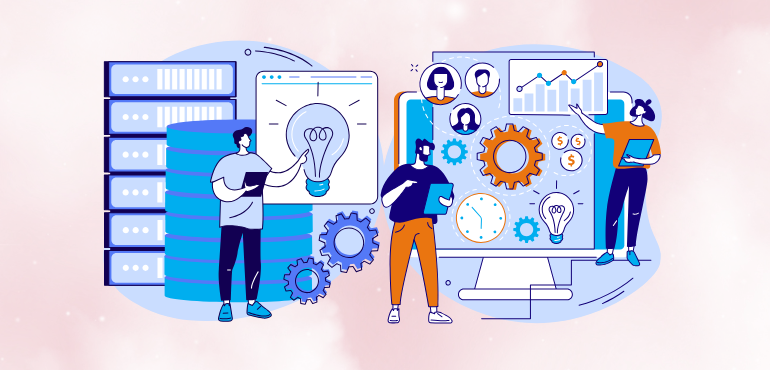
Break Down Data Silos: The Power of Enterprise Application Integration
Reading Time: 7 minutesBelieve it or not, large enterprises are managing an impressive average of 664 applications. With the enterprise application market projected to reach $334 billion by 2025, it’s clear that businesses are heavily investing in technology. However, juggling this many applications can lead to data silos, duplicate data, and inefficient processes. This is where Enterprise Application

How Can BPM Solutions Transform Your Operations?
Reading Time: 8 minutesBusiness process management (BPM) applies techniques to identify, model, analyze, measure, enhance, and optimize corporate strategy and processes. Although task and project management are occasionally confused with it, business process management encompasses more ground than these related subjects. Whereas BPM monitors the entire process from beginning to end, task management concentrates on specific tasks. While

Top 10 Dynamic No-Code Startups Disrupting Industries
Reading Time: 6 minutesThese days, websites, web apps, and mobile apps are necessary parts of our existence. Building these websites and apps used to take a long time and a lot of coding expertise. However, with the no-code trend gaining traction and steadily sweeping over the tech sector, this is no longer the case. The term “no-code movement”

How Quixy Can Help You with Digital Transformation ?
Reading Time: 7 minutesDigital transformation is the idea of not just converting a service into its digital form but turning it into an influential one. Quixy, the global leader in no-code platforms, enables enterprises from different sectors to develop customized digital solutions with little technical expertise rapidly. This foundation is necessary for firms aiming to streamline their processes,

Sandbox Branches: A Collaborative Framework for Effective Artifact Control
Reading Time: 4 minutesEffective management of multiple artifacts and solutions is essential, yet it can be quite challenging. Quixy’s Sandbox branches offer a systematic and organized solution, enabling developers to create, store, and manage artifacts in isolated spaces before deploying them to various stages. This article delves into the concept of Sandbox branches, highlighting their benefits and providing

Build-Launch-Manage Powerful Enterprise Applications with Quixy
Reading Time: 7 minutesThe demand for enterprise applications is skyrocketing. However, the struggle with a rigid ERP system is backing business needs instead of driving them forward. Agree or Not, this is the current reality of using off-the-self ERP solutions. One-size-fits systems often require workarounds, forcing units to change their processes instead of optimizing them. As a result,

An Absolute Guide to Office Automation System for Maximising Efficiency
Reading Time: 6 minutesCompanies need to adapt to these changes and move to automated systems due to the rapidly changing nature of technological innovations. The benefits of which can not be overlooked. The day-to-day activities of office administration can be significantly impacted by technology. Over 80% of organization leaders, according to research, say that they have increased automation

Mastering Processes with Advanced Business Process Management Systems Technology
Reading Time: 8 minutesRegardless of the industry, businesses often encounter necessary but repetitive processes such as invoice generation, expense approval, and customer support ticket management. Though these processes cannot be eliminated, they can be automated with the help of a business process management system (BPMS) to save time and effort. BPM tools enhance employee productivity and business efficiency

A Guide to Utilizing Low-Code and Change Management: Maximizing Enterprise Agility
Reading Time: 8 minutesEnterprises of substantial size are taking initiatives to optimize their organizations. We see this regularly in the public sector, as agencies strive for effective gains through modern technologies, such as Application Performance Monitoring (APM), Cloud Migration, Low-Code and no-code Platforms, DevOps, and a few others. This blog, Optimizing Enterprise Modernization: A Guide to Utilizing Low-Code

Login Authentication in Quixy: Streaming Security and Access
Reading Time: 7 minutesIn a rapidly evolving business environment, secure & adaptable login methods are essential. As organizations grow, they frequently encompass multiple departments and subsidiaries, each with specific security requirements. This progression demands flexible Single Sign-On (SSO) solutions that can adapt to varied login authentication preferences, simplifying access while ensuring strong security. Do you need help managing
Recent Posts





- Download the App