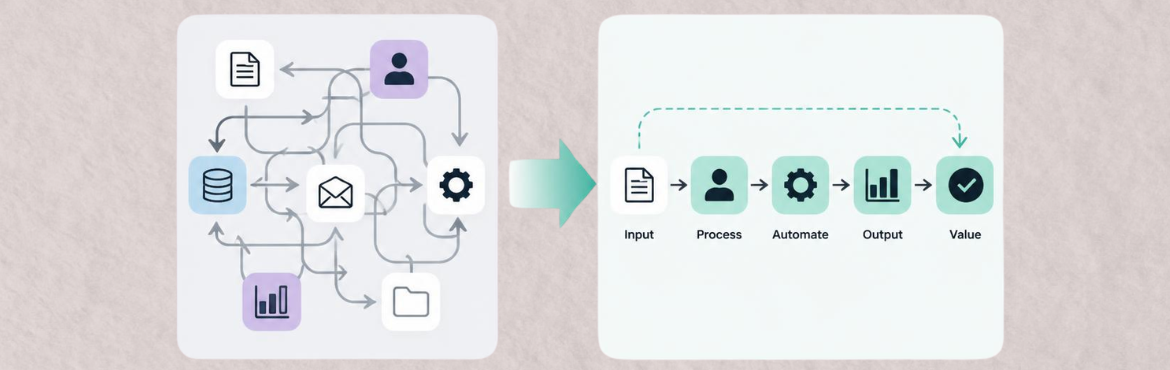

Business process transformation is the fundamental rethinking of how a business process works and what it is meant to achieve, not simply digitizing or automating the existing process. It is the outcome; reengineering, optimization, and process management are the methods used to reach it. Most programs fall short because they make a flawed process faster rather than better.
After 15 years of studying transformations, McKinsey’s finding has barely moved: fewer than a third succeed at both improving performance and sustaining the improvement. What their data also shows is more useful than the failure rate itself. Success did not depend on which approach a company chose. It depended on how completely the company executed across the entire effort, from goal-setting through to embedding the change in daily operations.
That reframes the whole conversation. Most discussions of business process transformation get stuck on method: reengineer or optimize, automate or manage. The evidence says the method matters less than two things almost no one leads with. First, whether the program actually changes the process or simply makes the existing one faster. Second, whether the change sticks. This article is about the difference between transforming a process and merely digitizing it, and why that difference decides the outcome.
Global spending on digital and business process transformation is projected to reach $3.4 trillion.
What Business Process Transformation Actually Is
Business process transformation is the fundamental redesign of how a business process operates in order to achieve a significantly better outcome. It changes not just the tools but the logic of the process: the steps, the decisions, the people involved, and often the goal the process is meant to serve.
It is easiest to define by what it is not. Digitizing a process, moving a paper form to a web form, is not transformation. Automating a process, removing the manual clicks, is not transformation either. Both can be valuable, but they leave the underlying process intact. Transformation asks a harder question first: should this process work the way it does at all? A three-day approval that moves through four people is still a three-day approval when you digitize the form. Transforming it means asking why it needs four approvers and three days in the first place.
Put simply, transformation is an outcome. The methods below are how organizations reach it.
Transformation Is the Goal. These Are the Methods.
Much of the confusion around business process transformation comes from treating it as interchangeable with the specific disciplines used to achieve it. They are not the same. Transformation is the destination. Reengineering, optimization, and process management are routes to it, and the right route depends on how much change the outcome requires.
| Method | What it changes | Best when |
|---|---|---|
| Business process reengineering | Radical redesign of the process from the ground up | The process is fundamentally broken and incremental fixes will not close the gap |
| Business process optimization | Incremental improvement of an existing, sound process | The process works but has friction, delays, or waste to remove |
| Business process management (BPM) | Ongoing modeling, monitoring, and governance of processes | You need to sustain and continuously manage processes over time |
The practical takeaway: choose the method that matches the size of the change you actually need. Reengineering a process that only needed optimization wastes effort and goodwill. Optimizing a process that is fundamentally broken locks in the flaw. And without ongoing process management, even a well-transformed process drifts back toward its old state. Each of the guides linked above goes deep on its method; the point here is that they serve one shared goal.
Why Most Business Process Transformations Fall Short
The failure rate is real, but the common explanations, resistance to change or the wrong technology, are usually symptoms rather than causes. Three patterns do most of the damage.
They digitize instead of transform. The most common failure is quiet: the program delivers a faster version of the same flawed process. Leadership sees new software and declares transformation, while the outcome the process produces has not meaningfully changed.
They treat it as a project, not a capability. A transformation with a start date and an end date tends to decay the moment the project team disbands. McKinsey’s research points to the same conclusion from a different angle: the organizations that succeed are the ones that execute across the full lifecycle, including embedding the change into business-as-usual, rather than the ones that run a time-boxed initiative and move on.
They automate the wrong process. Automating a broken process makes it fail faster and at greater scale. The sequence matters. Rethink the process, prove the new design, then automate what remains, rather than automating first and hoping the design was right.
The Line Between Digitizing and Transforming
The single most useful test for any business process transformation program is this: after the change, is the process doing the same thing faster, or is it doing something meaningfully different and better?
Consider a procurement approval. The digitized version replaces the emailed spreadsheet with an online form and routes it automatically. Faster, cleaner, still the same process: four approvals, sequential, triggered by a threshold set a decade ago. The transformed version asks why the threshold and the four approvers exist, removes the approvals that add no control, sets risk-based routing so low-value requests clear instantly, and reserves human review for the exceptions that warrant it. The first is digitization. The second changes what the process is.
This is why transformation cannot be bought as a piece of software. Software executes a process. Whether the process is worth executing is a design decision that has to come first.
How AI Is Changing Process Transformation in 2026
Artificial intelligence has sharpened both the opportunity and the risk. On the opportunity side, AI and agentic capabilities can take on judgment-based steps that previously required a person, which opens process designs that were not viable before. A transformed process in 2026 might route, decide, and act on routine cases end to end, escalating only genuine exceptions.
The risk is the familiar one wearing new clothes. Applying AI to a poorly designed process automates poor decisions at scale and with a veneer of sophistication. AI raises the stakes of the design question rather than removing it. It also makes governance non-negotiable: as more decisions are automated, access control, audit trails, and the ability to explain how a decision was made become part of the process design, not an afterthought.
Making Transformation Continuous, Not Episodic
If time-boxed projects decay, the alternative is to treat process transformation as an ongoing capability: a way of working where processes are visible, measured, and adjustable as conditions change. That requires the people who own a process to be able to change it without waiting on a long development cycle for every adjustment.
This is where a no-code platform earns its place in a transformation program. Quixy lets teams model, automate, and adjust business processes without traditional coding, with workflow modeling, business rules, integrations to systems of record, dashboards, and governance features such as role-based access and auditability. Because processes can be changed by the people who run them, a transformed process can keep evolving rather than freezing at go-live and drifting out of date. Quixy also includes AI capabilities for building and running workflows, which matters as more process steps move from manual to automated. The platform does not decide what a process should become. It makes acting on that decision, and revising it, fast enough to keep pace with the business.
Outcome First, Method Second
The organizations that get transformation right are not the ones that pick the fashionable method or buy the most capable software. They are the ones that start from the outcome, redesign the process to reach it, choose the method that fits the scale of change, and then keep the process alive rather than declaring victory at launch. Before the next transformation program, the question worth answering is not which approach to use. It is whether the plan changes what the process does, or just how quickly it does the same thing. Everything that matters follows from that.
Frequently Asked Questions
What is business process transformation?
Business process transformation is the fundamental redesign of how a business process works in order to achieve a significantly better outcome. It changes the logic of the process, its steps, decisions, and people, rather than simply digitizing or automating the existing version.
What is the difference between business process transformation and digital transformation?
Digital transformation is broad: the adoption of digital technology across an organization’s operations, culture, and customer experience. Business process transformation is narrower and more specific: rethinking how individual business processes work. Process transformation is often one part of a wider digital transformation, but it is possible to transform a process without a company-wide digital program, and to run a digital program that never truly transforms its core processes.
What is the difference between business process transformation and reengineering?
Transformation is the goal, a significantly better process outcome. Business process reengineering is one method for reaching it, specifically the radical redesign of a process from the ground up. Reengineering is the right method when a process is fundamentally broken; other methods, such as optimization, suit smaller changes.
Why do most business process transformations fail?
The common causes are digitizing a process instead of genuinely redesigning it, treating transformation as a one-time project that decays once the team disbands, and automating a flawed process so it fails faster. Research from McKinsey associates success with executing completely across the full transformation lifecycle rather than with any single method.
How do you measure business process transformation?
Measure the outcome the process is meant to produce, not the activity. Useful measures include cycle time, error and rework rates, cost per transaction, straight-through processing rate, and the outcome that matters to the business the process serves, such as time to onboard a customer or approve a request. If the numbers that matter have not moved, the process was digitized, not transformed.



Recent Posts







- Download the App